Serving Anoka, Hennepin, Ramsey, Washington, Scott, Dakota & Carver Counties
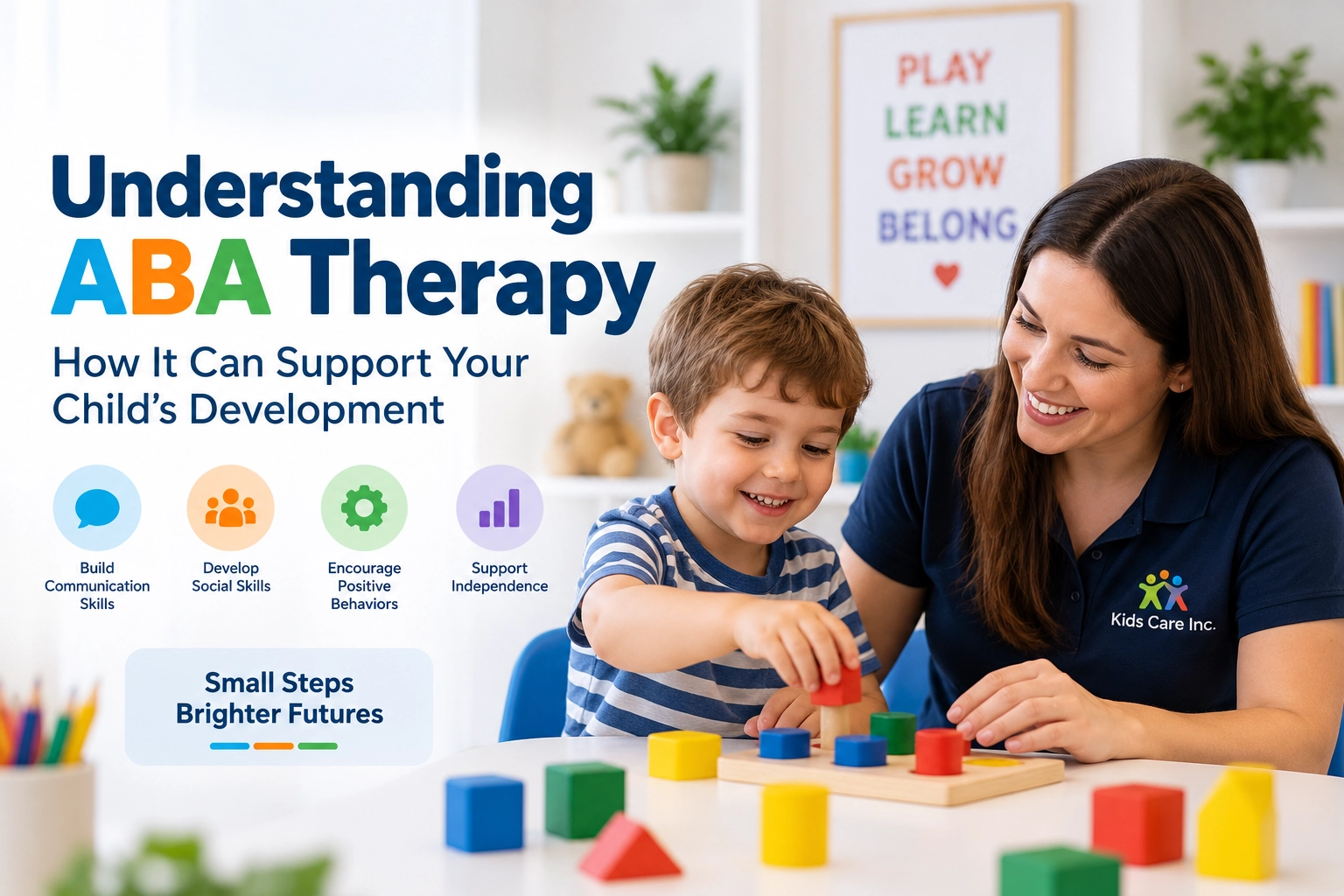
Understanding ABA Therapy: How It Can Support Your Child’s Development

Understanding ABA Therapy: How It Can Support Your Child’s Development
Every child learns, communicates, and develops in their own unique way. Some children may need additional support with communication, social interaction, learning, behavior, or everyday activities. Applied Behavior Analysis (ABA) therapy can provide personalized support to help children develop important skills and become more independent.
For parents and caregivers considering therapy for their child, understanding what ABA therapy is and how it works can be an important first step.
What Is ABA Therapy?
Applied Behavior Analysis, commonly known as ABA, is an evidence-based approach that focuses on understanding how behaviors are learned and how positive strategies can encourage meaningful skill development.
ABA therapy is not a one-size-fits-all service. A child’s individual strengths, challenges, interests, and goals are considered when developing an appropriate treatment approach.
The goal is to help children build skills that can make a meaningful difference in their everyday lives.
What Skills Can ABA Therapy Support?
Depending on a child’s individual needs and treatment goals, ABA therapy may support a variety of developmental and everyday skills, including:
- Communication and language skills
- Social interaction
- Following directions
- Learning and classroom skills
- Positive behavior
- Emotional and self-regulation skills
- Daily living activities
- Self-care and independence
- Building appropriate routines
The specific goals of therapy should always be based on the individual child and their needs.
Why Is Individualized Care Important?
Every child is different. Children may respond differently to the same teaching strategy, which is why individualized care is an important part of effective support.
A personalized treatment program can take into consideration a child’s current abilities, developmental needs, family routines, environment, and long-term goals.
This approach allows caregivers and professionals to focus on practical skills that are meaningful to the child and their family.
How Can Parents and Caregivers Be Involved?
Parents and caregivers play an important role in supporting a child’s development.
When families work together with their child’s care team, strategies learned during therapy can often be reinforced through everyday activities at home and in the community.
Simple daily routines can provide opportunities for children to practice communication, social interaction, independence, and other important skills.
Family involvement can also help caregivers better understand their child’s needs and identify ways to encourage progress outside of therapy sessions.
ABA Therapy and Everyday Development
Therapy is most meaningful when the skills a child learns can be used in real-life situations.
For example, a child may work on communication skills during therapy and then use those skills when asking for something at home. Another child may practice following directions or completing daily routines that can help them become more independent.
Progress may happen gradually, and every child’s journey is different. Small steps can become meaningful achievements over time.
When Should Parents Consider Additional Support?
If you have concerns about your child’s communication, behavior, social interaction, learning, or ability to complete everyday activities, talking with a qualified professional can help you understand your options.
An assessment can provide valuable information about your child’s strengths and areas where additional support may be beneficial. From there, a personalized treatment approach can be developed around the child’s needs and goals.
Supporting Your Child’s Next Step
Choosing the right services for your child can sometimes feel overwhelming. Having access to the right information and a supportive care team can make the process easier for families.
At Kids Care Inc., our services are designed to support children and families through different stages of development. In addition to ABA Therapy, we offer CMDE Assessments, Individual Treatment Programs, Family Care Giving, Speech Therapy, Occupational Therapy, Coordinated Care Conferences, and School Readiness.
Every child’s needs are unique, and the right support starts with understanding those needs.
Ready to Learn More?
If you’re exploring support options for your child, our team is here to help you learn more about available services and determine the next steps for your family.
Explore ABA Therapy and discover how personalized support can help your child build meaningful skills for everyday life.